
Estée Lauder Turns to University of Leeds for Colour Science
The global cosmetic giant has chosen Leeds’s world-leading colour scientists to help solve one of the industry’s most stubborn problems: matching foundation to every skin tone


One of the world’s biggest cosmetic companies has turned to the University of Leeds for its scientific expertise. The Estée Lauder Companies, the New York-listed group behind brands including Estée Lauder, MAC and Clinique, has announced a research collaboration with the university’s School of Design to improve how complexion products are matched to the full range of human skin tones. The work is led by Professor Kaida Xiao, a globally recognised authority in colour and imaging science. It is a notable endorsement of a distinctive Leeds research strength on an international stage.
Why a Beauty Giant Came to the University of Leeds
Finding the right foundation or concealer shade is a common frustration in beauty and the research sets out to fix that with science rather than guesswork. The project examines the gap between how colour is measured by instruments and how people actually perceive skin tone in real-world conditions, aiming to pinpoint when subtle differences in tone become noticeable and when they do not. The findings could set new scientific benchmarks for evaluating complexion products across the full, diverse spectrum of skin tones with inclusivity a central goal. The work is based at the Leeds Institute of Textiles and Colour, part of a School of Design founded in 1874 that now has more than 100 academics and research fellows. Professor Xiao’s specialism in colour perception is what drew a company that describes itself as having 75 years of formulation expertise.
“This partnership brings together academic expertise and industry leadership to advance understanding in this important area of colour science.”
Professor Kaida Xiao, Professor of Colour and Imaging Science, University of Leeds
A Boost for Leeds’s Research Reputation
For the city, the significance is less about cosmetics than about credibility. A NYSE-listed multinational choosing Leeds underlines the commercial pull of the university’s research base, which is increasingly a draw for industry partners across sectors from health technology to artificial intelligence. It adds to a picture of a city whose universities are not just educating talent but attracting global companies to work with them. Financial terms of the collaboration were not disclosed, and as a research partnership its value will be measured in outcomes and reputation rather than an upfront figure. But for a university and a city keen to be known for applied science, having the University of Leeds sought out by a household name is a meaningful marker of standing.
Buyer's guideSupport programmes and accelerators in Leeds: The Complete Guide →
University of Leeds on Leeds Today


 Latest news
Leeds Ranks 8th in UK AI Readiness Index, Driven by University
Leeds has been ranked the UK's eighth most AI-ready city in the SAS AI Cities Index 2026, with its university strengths driving much of…
A.MacGregor · 7 Aug 2026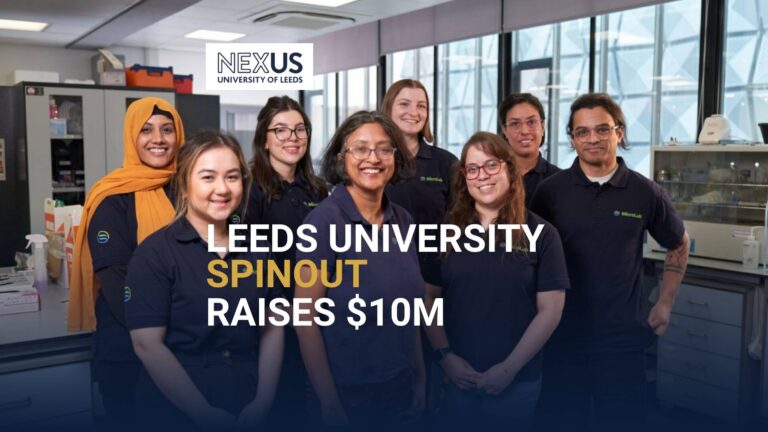 Funding, deals and investment
Leeds University Spinout MicroLub Raises $10m to Scale Globally
University of Leeds food-science spinout MicroLub has raised $10m, led by Northern Gritstone, to scale its fat-replacing ingredient technology into the US and Asia.
A.MacGregor · 18 Sep 2026 Latest news
University of Leeds and Grant Thornton Launch Paid Degree
The University of Leeds has partnered with Grant Thornton on Talent Track, a four-year accounting degree combining paid placements with a route to chartered…
A.MacGregor · 7 Aug 2026